 Tendrl
Tendrl CLI: Strand Commands
Everything under tendrl-cli strand uses your Strand API key (STRAND_API_KEY). Bodies go via --data '<json>' / --file body.json; fields marked required are enforced by the API.
workflows#
workflows create / update#
tendrl-cli strand workflows create -d '{
  "account_id": "377036796",
  "name": "temp-alerts",
  "description": "Alert when a sensor runs hot",
  "tags": ["telemetry"],
  "is_active": true
}'
| Field | Type | Notes |
|---|---|---|
account_id |
string | required — your account number (see tendrl-cli whoami) |
name |
string | required, ≤ 200 chars |
description |
string | ≤ 2000 chars |
tags |
array | 1–10 tags; Contact messages carrying a matching tag can trigger the workflow |
exposed_to_contact |
bool | show this workflow in the Contact console (default false) |
allowed_sources |
array | entity-name patterns allowed to trigger it |
is_active |
bool | default true |
schedule_type / schedule_expr / schedule_timezone / schedule_payload |
built-in scheduler; see workflows schedule-presets for ready-made expressions |
update takes the same fields, all optional (account_id still required by the API).
workflows save#
Every save mints a new immutable version of the graph:
tendrl-cli strand workflows save <workflow-id> -f graph.json
Body — the graph itself:
| Field | Type | Notes |
|---|---|---|
nodes |
object | required — node id → node config ({"type": "...", "config": {...}}); node types from tendrl-cli api strand GET /node-types |
edges |
array | required — [{"from": "n1", "to": "n2"}, ...] |
variables |
object | workflow variables available to templates |
workflows run#
tendrl-cli strand workflows run <workflow-id> -d '{"temp": 71.2}'
tendrl-cli strand workflows run <workflow-id> --version <version-id>
The payload you pass with -d becomes the run's input data. Runs are queued — a 503 means the run queue is full; retry after the retry_after it reports.
workflows export / import / versions / delete#
tendrl-cli strand workflows export <workflow-id> --out backup.json
tendrl-cli strand workflows import backup.json --name restored-copy
tendrl-cli strand workflows versions <workflow-id>
tendrl-cli strand workflows delete <workflow-id> -y
export/import round-trip as JSON files — the natural way to move a workflow between accounts or keep it in git.
runs#
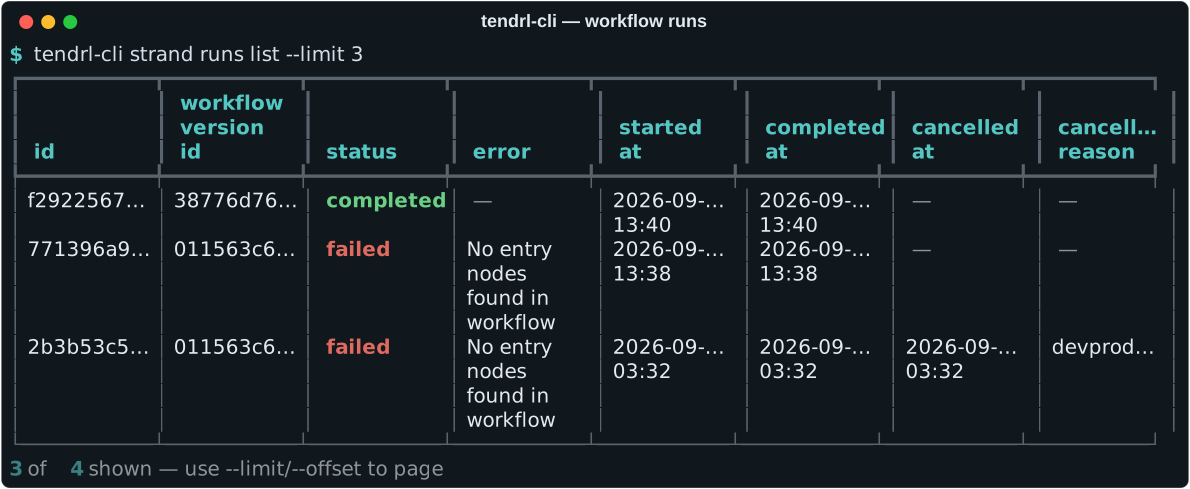
tendrl-cli strand runs list --status running --limit 20
tendrl-cli strand runs get <run-id>
tendrl-cli strand runs steps <run-id>
tendrl-cli strand runs cancel <run-id> --reason "bad input"
list filters: --status (queued, running, waiting_approval, completed, completed_with_errors, failed, cancelled), --limit, --offset.
runs approve / reject#
A run paused on an approval node shows a step with status waiting_approval in runs steps:
tendrl-cli strand runs approve <run-id> <step-run-id> --comment "looks right"
tendrl-cli strand runs reject <run-id> <step-run-id> --comment "wrong target"
connectors#
tendrl-cli strand connectors types        # what connector types exist
tendrl-cli strand connectors ai-models    # available AI models by provider
connectors create / test#
tendrl-cli strand connectors create -d '{
  "name": "internal-api",
  "connector_type": "http",
  "config": {"base_url": "https://api.example.com"}
}'
| Field | Type | Notes |
|---|---|---|
name |
string | required |
connector_type |
string | required — from connectors types (e.g. http, ai-anthropic, postgres, slack) |
config |
object | required — type-specific; each type's fields are documented under Connectors |
description |
string | |
is_active |
bool | default true |
connectors test -d '{...}' takes the same connector_type + config and checks connectivity without saving.
tendrl-cli strand connectors list --type http
tendrl-cli strand connectors get <connector-id>
tendrl-cli strand connectors delete <connector-id> -y
functions#
Reusable Python, callable from workflow nodes.
tendrl-cli strand functions create -d '{"name":"double","code":"def handler(data):\n    return {\"x\": data.get(\"x\", 0) * 2}"}'
tendrl-cli strand functions test <function-id> -d '{"x": 21}'
tendrl-cli strand functions test --code-file ./fn.py -d '{"x": 21}'   # test unsaved code
Create body: name (required), code (required, ≤ 10 000 chars, must define handler(data)), description. test's -d is the test payload passed to handler.
vault#
Encrypted secrets, referenced from workflow configs; values are never returned by the API.
tendrl-cli strand vault set SLACK_TOKEN            # value prompted, hidden
tendrl-cli strand vault set DB_PASSWORD 's3cret' --description "prod read replica"
tendrl-cli strand vault list
tendrl-cli strand vault delete <vault-id> -y
configurations#
Named JSON blobs workflows can read.
tendrl-cli strand configurations create -d '{"name":"thresholds","config_type":"generic","config_data":{"temp_max":80}}'
Body: name (required), config_type (required), config_data (required, object).
templates#
tendrl-cli strand templates list --category monitoring
tendrl-cli strand templates get <template-id>
tendrl-cli strand templates readiness <template-id>   # what it needs before it can run for you
tendrl-cli strand templates use <template-id> --name my-copy
keys, team, roles#
tendrl-cli strand keys create -d '{"name":"ci-key","role_id":"<role-id>"}'
tendrl-cli strand keys rotate <key-id>
Key body: name (required), description, role_id (from roles list; defaults to the Editor role). Tokens shown once. Creating keys requires an account admin/owner.
tendrl-cli strand team list
tendrl-cli strand team invite [email protected] --role Viewer   # role names resolve to ids
tendrl-cli strand team set-role <user-id> Editor
tendrl-cli strand team remove <user-id> -y
tendrl-cli strand roles list
tendrl-cli strand roles permissions      # every assignable permission id
usage, audit, whoami#
tendrl-cli strand usage current | history | breakdown | summary
tendrl-cli strand audit --resource-type workflow --limit 50    # Standard plan and up
tendrl-cli strand whoami                                       # account + role behind your key
